
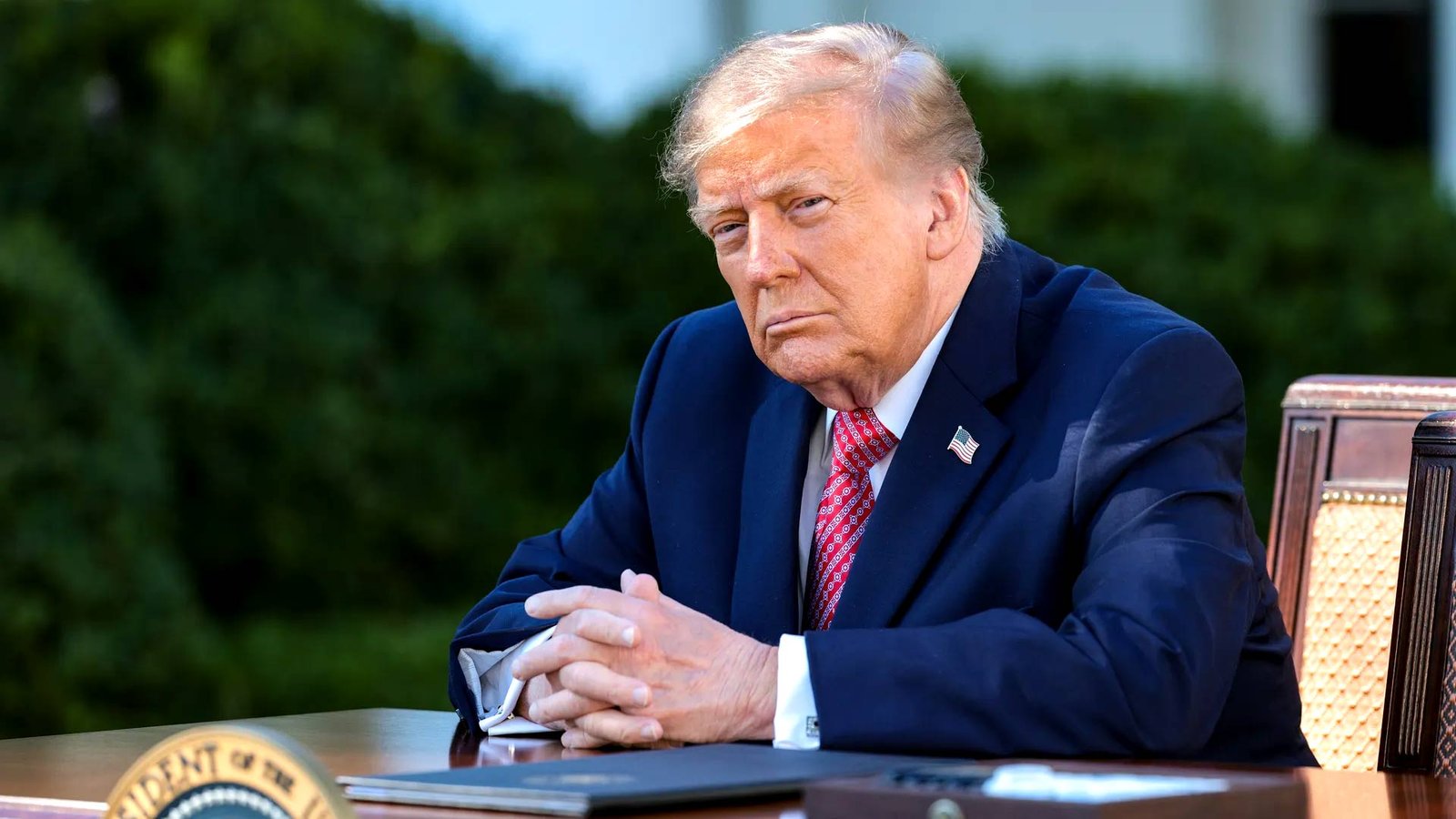
Geopolitical Strategy of Donald Trump. Image Courtesy – AXIOS
Beneath the fast-moving headlines and high-stakes diplomatic shifts, a distinct blueprint has taken shape in American foreign policy—the systematic dismantling of key partnerships surrounding major power rivals. Rather than engaging directly in broad, multi-front military clashes with Beijing or Moscow, Washington’s contemporary Geopolitical Strategy centers on “deep denial”—a calculated approach designed to isolate adversaries, secure vital supply routes, and rebalance global power dynamics without triggering catastrophic direct warfare.
This strategy operates through three interconnected pillars: partner isolation, energy security leverage, and transactional unpredictability.
1. Isolating Key Adversary Anchors
A central mechanism of this strategy is depriving rivals of international external support. In the Middle East, swift efforts to stabilize post-Assad Syria under a pro-Western framework are actively unwinding decades of Russian military presence and curtailing Chinese economic ambition in the Levant. Brokered regional ceasefires—from Gaza to Southern Lebanon—are systematically constraining proxy networks like Hamas and Hezbollah, diminishing the leverage Beijing and Moscow once enjoyed in regional crises.
Simultaneously, targeted pressure on Iran aims to neutralize another major authoritarian node. By challenging Tehran’s nuclear capabilities and proxy funding, the strategy seeks to sever the operational spine connecting state and non-state actors across the Middle East.
2. Recapturing Energy Corridors and Resource Security
Energy remains the lifeblood of industrial power, and securing major production hubs is a primary objective. In the Western Hemisphere, decisive actions against non-aligned regimes—most notably the removal of Nicolás Maduro in Venezuela—have drastically altered security coordination across Central and South America.
- Redirecting Trade: The halt of discounted crude flows from Venezuela to authoritarian partners fundamentally disrupts long-standing non-aligned trade corridors.
- Mitigating Strategic Risks: By bringing Venezuelan oil assets back within Western-aligned regulatory orbits, Washington limits rival access to the world’s largest proven reserves.
- Choking Supply Chains: If combined with potential supply shifts out of the Persian Gulf, a substantial portion of China’s total energy imports could face vulnerability during a regional standoff, such as a Taiwan Strait crisis.
3. Transactional Realism and Strategic Unpredictability
Drawing inspiration from classic treatises like Sun Tzu’s The Art of War and modern high-stakes dealmaking, Washington’s approach weaves tactical surprise into broader diplomatic efforts.
- Allied Burden-Sharing: Uncompromising demands directed at NATO and Asian partners have broken decades of defense-spending inertia, forcing European and Pacific allies to assume primary responsibility for regional deterrence.
- Buying Time: A High-level dialogue with Contender leaders is maintained not as an end in itself, but as a deliberate tactic to delay acute escalation. This buys time to fortify key maritime choke points, such as the First Island Chain stretching from Japan through Taiwan and the Philippines, while strengthening Western industrial capacity.
- Economic and Tech Pressure: Sustained sanctions targeting critical technologies and financial clearings act as a silent, long-term drag on rival economies.
A stark transformation is underway in American foreign policy. Shifting away from decades of liberal internationalism, multi-nation pacts, and ideological crusades, Washington’s modern Geopolitical Strategy has re-centered on a fiercely pragmatic “America First” framework.
By combining economic nationalism, coercive trade measures, and a renewed claim to regional supremacy, this posture favors transactional outcomes over traditional institutional alliances.
Key Pillars of the Strategy
1. Hemisphere Hegemony: The “Donroe Doctrine”
At the heart of this strategy is an expanded posture in the Western Hemisphere, commonly framed through an updated corollary to the Monroe Doctrine.
- Punchy & Direct: “Instead of spreading its military footprint across the globe, Washington is locking down complete security control, vital resources, and political clout in its own backyard.”
- Analytical & Sharp: “Washington has abandoned uniform global deployment to concentrate its firepower on total strategic control, resource security, and influence across the Americas.”
- Policy-Focused: “Rather than maintaining an equal posture in every corner of the world, American strategy now pivots on hemispheric supremacy—protecting critical resources and asserting dominant influence across the Western Hemisphere.”
- Strategic Chokepoints: Increased focus and geopolitical pressure are placed on vital maritime routes like the Panama Canal and northern corridors like Greenland to deny rival influence near U.S. borders.
- Supply Chain Consolidation: Pressure on non-compliant regimes—such as Venezuela—seeks to align continental energy flows and secure critical mineral supply lines strictly within Western-friendly orbits.
2. Weaponized Tariffs & Economic Realism
Aggressive economic policies serve as the primary leverage point. High tariffs—ranging from double-digit baseline rates up to targeted penalties of 100% to 250%—are deployed directly as strategic instruments rather than simple fiscal tools.
- Trade Rebalancing: Unilateral tariffs are used to force bilateral trade adjustments and disincentivize offshoring.
- Economic Defense: Heavy tariffs punish foreign competitors and non-cooperative partners while shielding local factories from outside competition.
3. Transactional Dealmaking and Mediation
The American administration bypasses broad international institutions in favor of direct, personalized negotiations.
- Bypassing Bureaucracy: Rather than working through multi-lateral summits, Washington relies on fast, bilateral dealmaking to mediate conflicts and broker regional accords.
- Pragmatic Ceasefires: Conflict management focuses on securing rapid regional stabilization frameworks—such as updated peace efforts in the Middle East—without binding the U.S. to long-term nation-building obligations.
4. Re-evaluating Traditional Alliances
Collective security pacts like NATO face unprecedented scrutiny.
- Burden-Sharing: European and Asian partners are pressed to assume primary financial and operational responsibility for their own regional defense.
- Strategic Restraint: The U.S. adopts a more detached posture toward foreign conflicts, including the war in Ukraine, forcing regional neighbors to shoulder the strategic burden.
5. Indirect Isolation of Major Rivals
Rather than engaging China or Russia through ideological rhetoric, the core aim is to quietly degrade their long-term reach.
- Economic Choking: Targeted technology restrictions and energy market maneuvers weaken rival industrial capacities over time.
- Corridor Competition: By asserting presence in critical transit channels and mineral-rich corridors—from Africa to the Caucasus—Washington actively displaces adversary footprints without engaging in direct military clashes.
This evolving Geopolitical Strategy exchanges permanent global commitments for maximum maneuverability. By prioritizing regional control in the Americas, utilizing economic tariffs as levers, and compelling partners to carry their own security weight, Washington aims to preserve American leverage while isolating strategic rivals from the outside in.


